Ropode AFM DFM Disabler Fitment Chart by Year and Engine
Getting Ropode AFM DFM disabler fitment right is the single highest-value thing you can do before ordering, because fitment errors account for most of the disappointment in this product category. A module that suits a 2014 Silverado 5.3L may do absolutely nothing on a 2021 truck, and the listing will not always make that obvious.
This guide explains the two systems, where GM switched between them, and how to confirm what your specific vehicle has.
AFM and DFM Are Not the Same System
Active Fuel Management is GM's original cylinder deactivation system. It shuts down four of the eight cylinders — numbers 1, 4, 6 and 7 — using collapsible lifters controlled by an oil-pressure-actuated valve lifter oil manifold. The engine runs either as a V8 or as a V4, with nothing in between.
Dynamic Fuel Management replaced it and works differently. Rather than a single eight-to-four switch, DFM can run seventeen distinct firing patterns, continuously varying how many cylinders fire and which ones. It is a more sophisticated implementation of the same underlying idea.
Because the control logic differs, a module written to block AFM's binary decision does not necessarily control DFM's continuous one. This is the root cause of most fitment failures.
Why Ropode AFM DFM Disabler Fitment Depends on the Engine, Not the Badge
Two trucks with identical badges and the same model year can have different engines and therefore different systems. The engine family determines fitment. The trim level, cab configuration and drivetrain do not.
The AFM Years: Roughly 2007 to 2018
The AFM era covers the bulk of the used GM V8 market and is where most disabler demand originates.
On the pickup side this includes the Silverado 1500 and Sierra 1500 with the 5.3L V8 across the GMT900 and K2XX generations, plus 6.2L variants in higher trims. On the SUV side it covers Tahoe, Suburban, Yukon, Yukon XL and Escalade across the equivalent years.
Not every engine in these years used AFM. Some 4.3L V6 and 6.0L applications, particularly in heavy-duty and fleet configurations, did not. If you are unsure, the verification steps further down settle it.
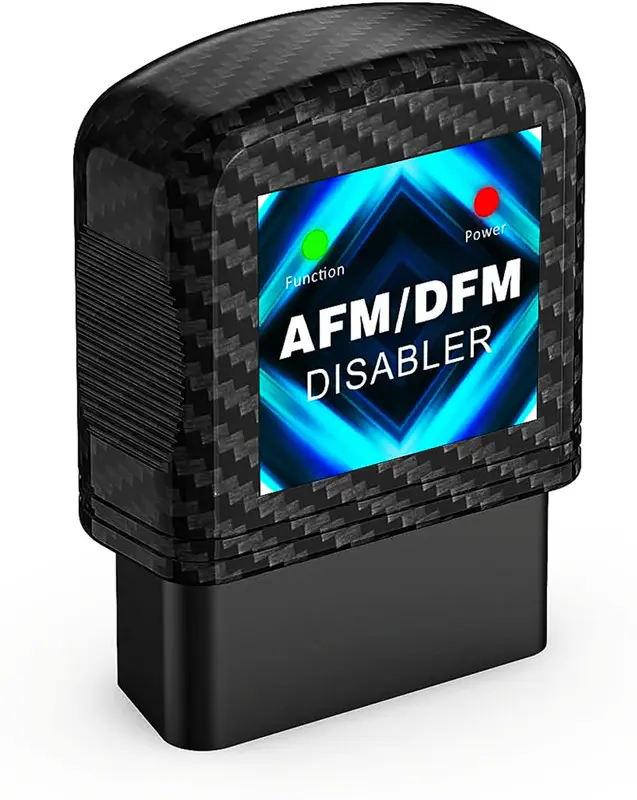
For 2007–2018 5.3L trucks
Ropode AFM DFM Disabler — 5.3L Daily Driver Pick
A plain plug-and-forget option for the AFM-era half-tons described above. Check your RPO code first — fitment causes more returns in this category than build quality does.
Buy on AmazonWe may earn commission from links in this article, at no extra cost to you.
The DFM Years: 2019 Onward
The T1XX generation introduced the L84 5.3L and L87 6.2L engines, both running Dynamic Fuel Management. The switchover was tied to the new platform rather than a calendar date, so the exact first year varies slightly by model.
For a module to work on these vehicles, the listing needs to name DFM explicitly and preferably name your model year. A listing that says only 'fits GM V8' or 'AFM disabler' without further detail is not making a claim about your truck.
Some modules cover both systems. Those are the safer purchase if you own vehicles from both eras or are not certain which you have.
The Ropode AFM DFM Disabler Fitment Grey Zone
Model-year transitions are messy. A vehicle built late in one calendar year may carry the following model year, and platform changes do not align neatly with January. If your truck sits on a boundary — a 2018 or 2019 in particular — verify by engine code rather than trusting the year alone.
How to Confirm What Your Truck Actually Has
Three methods, in order of reliability.
- RPO codes. Open the glovebox and find the sticker listing three-character regular production option codes. These specify the exact engine your vehicle left the factory with.
- The VIN. The eighth character of a GM VIN identifies the engine. A dealer parts department can decode it in seconds, and free online decoders handle it too.
- A scan tool. Watch the cylinder-mode parameter in live data while cruising. If it alternates between V8 and V4, you have deactivation of some kind, and the model year tells you which.
Checking Ropode AFM Disabler Fitment Before You Order
Once you know the engine, compare it against the product's application list rather than the product title. Titles are marketing; application lists are claims. If the seller provides no application list at all, that absence is information in itself.
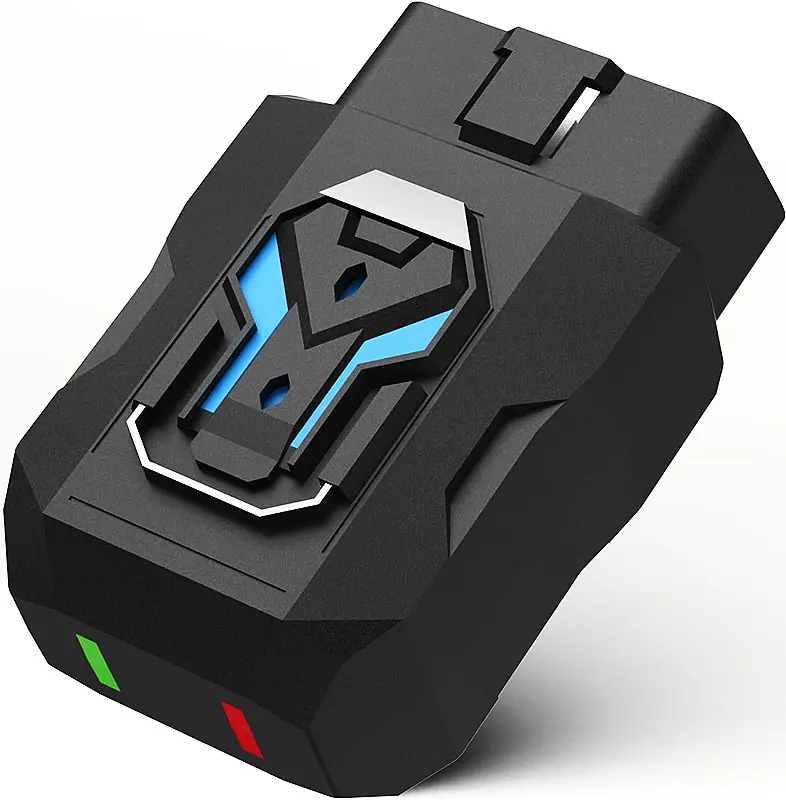
Auto re-arm version
Ropode AFM Disabler — Auto Re-Arm Option
Same job, but it re-engages on its own at every start rather than needing a button press. Worth the difference once you have confirmed your engine and know a module will actually apply.
Buy on AmazonVehicles This Category Does Not Cover
A disabler is only relevant if your engine has cylinder deactivation to disable. Heavy-duty trucks with the 6.0L Vortec, most diesel applications, and older pre-2007 V8s generally do not run AFM, so there is nothing for a module to block.
Similarly, if you have already had an AFM delete performed — a mechanical job replacing the camshaft, fitting non-AFM lifters and blocking off the lifter oil manifold — the hardware is gone and a module serves no purpose.
A Practical Fitment Summary
For a 2007 to 2018 Silverado, Sierra, Tahoe, Suburban, Yukon or Escalade with a 5.3L or 6.2L V8, you are almost certainly looking at AFM, and the broadest range of modules will apply.
For a 2019 or newer equivalent, you are looking at DFM, and you need a module that names DFM support explicitly.
For anything on the 2018 to 2019 boundary, or any vehicle where you are not certain of the engine, check the RPO codes before ordering. It takes two minutes and prevents the single most common cause of a return.
Frequently Asked Questions
How do I know if my truck has AFM or DFM?
Model year is the first indicator — roughly 2018 and earlier is AFM, 2019 and later is DFM — but the RPO code sticker in the glovebox is definitive.
Will an AFM disabler work on a DFM truck?
Sometimes, but you should not assume it. Unless the listing names DFM support for your model year, treat it as unlikely.
Does cab or bed configuration affect fitment?
No. Fitment depends on the engine and its control system, not on body configuration.